Book Review: Langston Hughes
From GLReview
By Martha E Stone
A physically attractive book, with heavy, glossy pages and some rarely seen black-and-white images
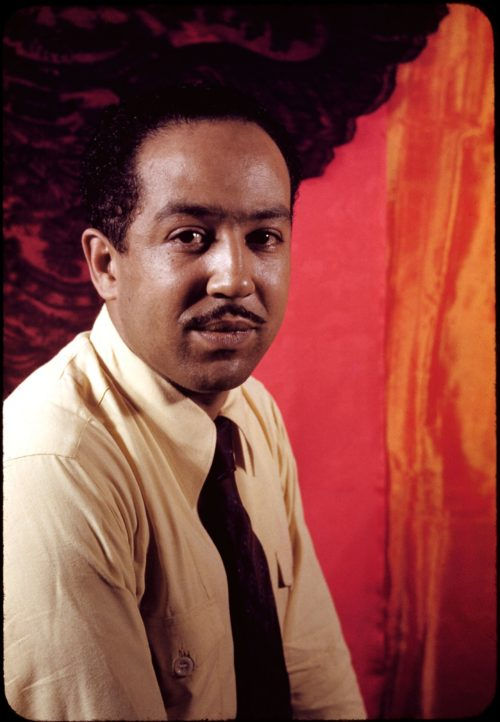
LANGSTON HUGHES (1902–1967), one of the best-known writers of the Harlem Renaissance, remains an endlessly fascinating, charismatic figure. He was born into a chaotic but well-educated and politically connected family, sometimes living with his mother or grandmother or family friends. At other times, usually during the summer, he lived with his father, who could abide neither family life nor Jim Crow laws, and had left his family behind to build a life in Mexico. This unsettled life no doubt was part of the reason that Hughes wrote in his second memoir, I Wonder as I Wander (1956): “I often feel very sad inside myself [though]not inclined to show it.” He was elected class poet in elementary school, where his teachers introduced him to such poets as Carl Sandburg, Amy Lowell, and Walt Whitman. But it was after reading the poems of Guy de Maupassant that he decided to become a poet.

